

What Happens When You Gender Bend Close Friends With A Magic App Lol
Can Manga and Anime Contribute to Feminism and Gender Studies?
In 2014, Laura Pope Robbins publishedBringing Anime to Academic Libraries. The purpose of the article was to provide a decisive argument as to why experiencing anime can be beneficial within the setting of academia. The basis of Robbins' argument for exposing students to manga and anime was so that they might better understand certain aspects of Japanese culture specifically. However, her argument can be expanded to incorporate a variety of themes present in popular manga and anime series which could be beneficial within various academic discourses. This article will focus on in what ways popular series may serve a pivotal role in the discourse of gender studies and feminist philosophy.
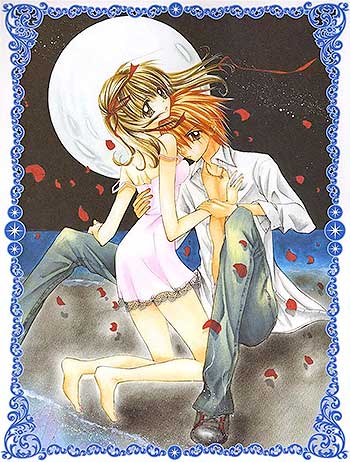
While there are countless genres of manga and anime that are able to contribute to academic discourse, the genres that will be the focus here are mahō shōjo, or Magical Girl anime, and anime series featuring "gender-bender" elements. The themes present within these particular genres could prove useful in furthering present discussions concerning gender and sexuality. Additionally, because manga or anime can be argued as being much more accessible than a dense academic paper, particularly for those just starting to learn about such topics, a move to include manga and anime both in feminist or gender studies-based curriculums as well as source material for higher level academic scholarship could prove useful. This article will examine these particular genres of manga and anime situated within both feminist and Gender Women's and Sexuality Studies (GWSS) context in order to parse out in what ways the inclusion of manga and anime can both contribute and detract from the present academic conversations.
The Magical Girl: Feminist Transcendence or a Reinforcement of Gender Norms?
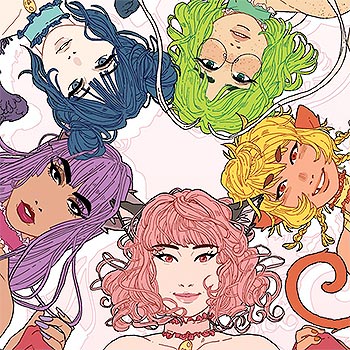
Magical Girl anime (mahō shōjo) is a genre of anime which is marketed toward young girls between the ages of 4 and 9. Well-known series contained in this genre includeSailor Moon, Mermaid Melody Pichi Pichi Pitch, Cardcaptor Sakura, Tokyo Mew Mew, and Shugo Chara.Magical Girl anime typically centers around a young female hero, usually around middle school age, who is abruptly thrown into fantastic adventures following her sudden development of magical power. Fans follow the young heroine as she protects her friends, family, and the world from evil forces using her newfound powers. As such, this genre at first positions itself in clear opposition to traditional gender norms which claim that women are not as strong or determined as men, and should instead focus on being good daughters, wives, and mothers.
Scholar Susan Napier notes that:
"popular youth-oriented anime series such as the 1980s Cutey Honey and the 1990s Sailor Moon show images of powerful young women (albeit highly sexualized in the case of Cutey Honey) that anticipate genuine, although small, changes in women's empowerment over the last two decades and certainly suggest alternatives to the notion of Japanese women as passive and domesticated."
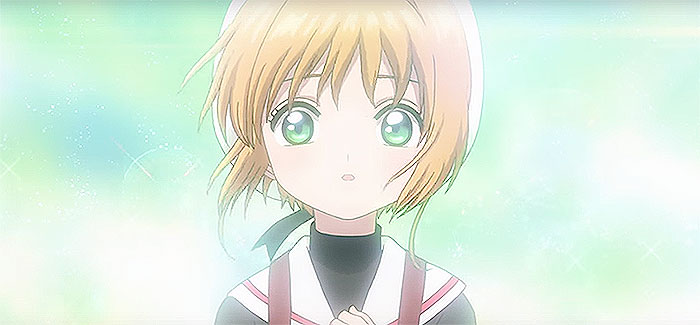
This statement is certainly not misplaced, as most of the more popular shōnen anime, which are geared toward young men, tend to focus on the development of the young male protagonist. The female characters in these shows typically fall far behind their male counterparts in strength and determination. All too often their only important role is to uplift and support the male character through his struggles, such is the case with Sakura and Hinata inNaruto, or Rukia and Orihime inBleach.It is certainly the case that these four specific women in many ways come into their own during the course of each series, but admitting that they never become as strong or as independent as their male counterparts in the series is unavoidable.
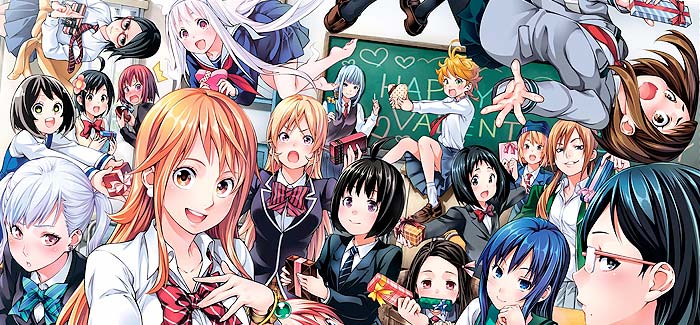
Most typical examples of mahō shōjo contain several basic tropes: a young female character, supernatural powers, and the quintessential transformation sequence that turns the "normal girl" into a warrior for peace and justice. The transformation sequence, framed within the context of feminist thought and GWS, is a crucial point of focus here. This transcendental moment is when the young girl ceases to be the "average girl," the girl who is constantly being molded by society to be the embodiment of her ascribed gender role, and suddenly becomes its antithesis. Scholars Susan Napier and Kotani Mari claim that "identity transformation, a common device that changes the female protagonist from a mediocre girl to a cute warrior, [is] an identity transcendence that undermines fixed traditional gender roles." In many ways, this statement is true. The traditional role of women in society is to be weak and obedient; a superhuman young woman is obviously opposed to these traditional gender norms.
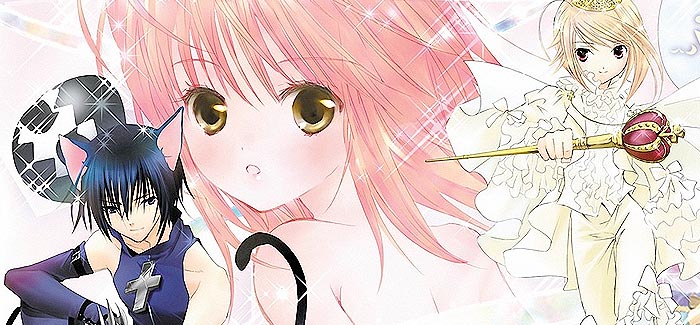
Sadly, for many such anime, the insidious presence of gender norms persists. Scholar Kumiko Saito rightly points out that arguments like Mari and Napier's, while appealing, encounter problems with their initial premise. Saito claims that such arguments encounter difficulty in "[hypothesizing] such reflexive connections between women's gender roles and the popularity of fighting female heroes." For Saito, this difficulty emerges from the fact that mahō shōjo is in actuality most interested in marketing products to young children. Many classic female heroes present within the Magical Girl franchise accomplish their tasks through the use of magical accessories including wands, staffs, or magical animal counterparts. All of these can be and are later marketed as a product that fans of the show will buy, and Saito cites the deficit that companies encounter per each animated episode that they produce as the main reason as to why their true goal is marketing products to their adolescent fanbase.
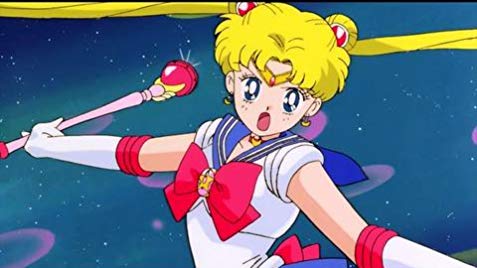
It is due to this fixation on marketing that scholar Anne Allison, speaking on Sailor Moon,notes that the "battle heroine" is, in actuality, a "self-indulgent pursuer of fantasies and dreams through consumption of merchandise." The process of the heroine's transformation is, for many critics, actually more of a makeover than a power-up; this inclination is displayed most obviously in Sailor Moon, as the Sailor Scouts must literally shout "Make-Up!" in order to initiate their transformation sequence. A similar spirit may be observed in Cardcaptor Sakura, as every time Sakura goes out to hunt down Clow Cards she must first change into a new outfit, each one made for her by her best friend and somewhat-sidekick, Tomoyo. Due to this tendency of mahō shōjo anime to rely heavily on feminine, sexualized aesthetics when carrying out their character building, scholar Saito Minako claims that such programs actually work to reinforce fixed gender roles in society.
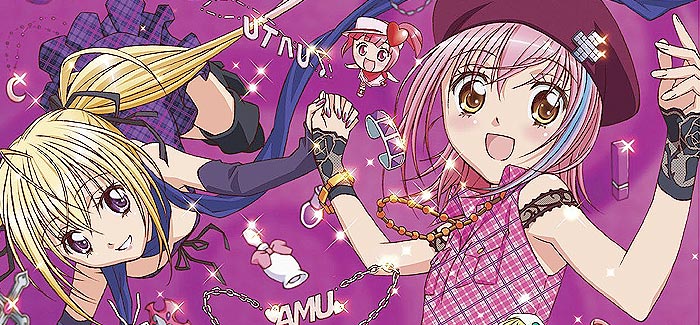
The heroine's reliance on looking pretty or depending on a variety of kitschy gadgets in order to carry out her world-saving duties, Minako argues, teaches girls to become good daughters and workers. Hence, most traditional mahō shōjo protagonists in fact reinforce traditional values of femininity, even buttressing the importance of marriage and domestic life in the minds of young girls. You can see this inclination distinctly in shows like the ones already mentioned here, where the female protagonist slowly comes to rely on a male counterpart––for example, Usagi's growing reliance on Mamoru, Sakura's slow-budding love for Syaoran, or Amu's (at first unwilling) attachment to Ikuto.
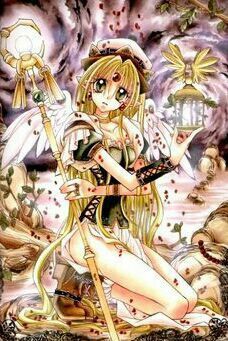
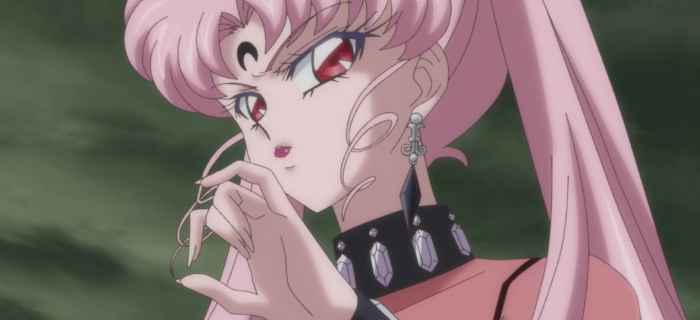
This male magical counterpart is almost always presented, at first, as mysterious, aloof, and even sometimes as opposed to the female protagonist as was the case with Amu and Ikuto. This opposition would superficially seem to illustrate mahō shōjo's rejection of traditional gender roles such as marriage and domesticity. However, each of these show's female warriors eventually fall in love with the male counterpart and come to rely on him for both moral and physical support during combat and in everyday life. Reinforcing this argument, the female "bad guys" in many such series––Black Lady inSailor Moon or Finn Fish inKamikaze Kaitō Jeanne, for example––wear heavy makeup and possess a focus on careerism; the female villains in mahō shōjo come to represent those women who failed to be wives and mothers. Fortifying this point in the most literal sense is Finn Fish, an angel who has been stolen away from god by the devil.
Saito Tamaki proposes that anime and manga are produced and consumed within an imagined, autonomous world of representations that are detached from recognized reality. Hence, it can be argued that the implementation of manga or anime into an educational setting would not be productive at all, as it is not viewed as being connected to reality in the same way as other educational tools. Scholars argue that much of the current fanbase for mahō shōjo, which is suspiciously not only marketed to young girls but also men between 19 and 30, demands that consumers become indifferent to reality. Instead, the industry focuses on character fetishism in a "self-enclosed economy of desire."
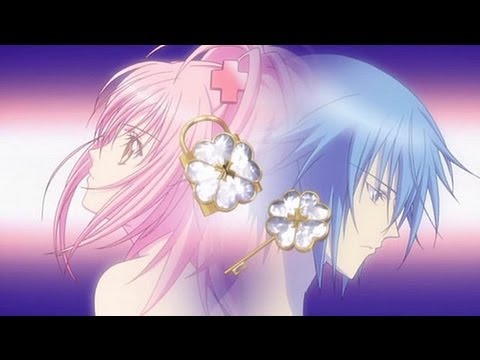
Throughout many of these series, in spite of being geared toward young women and presenting themes that may initially compel one to view it as feminist rhetoric, the theme of men being stronger than women is still pervasive. Unfortunately, such shows prop up the present status quo by subtly suggesting that any woman, her strength and independence aside, desires someone to be protected by. According to Kumiko Saito, this desire is further solidified through the heroine's ability to "covertly [teach] girls to pursue fashion, romance, and consumption until marriage and, once married, to stay at home as a good wife and mother."
Gender, Sexuality, & Fantasy: Gender-Bender Manga and Anime
Gloria Jean Watkins, better known by her pen name bell hooks, famously claimed:
"The first act of violence [the] patriarchy demands of males is not violence toward women. Instead, patriarchy demands of all males that they engage in acts of psychic self-mutilation, that they kill off the emotional parts of themselves. If an individual is not successful in emotionally crippling himself, he can count on patriarchal men to enact rituals of power that will assault his self-esteem."
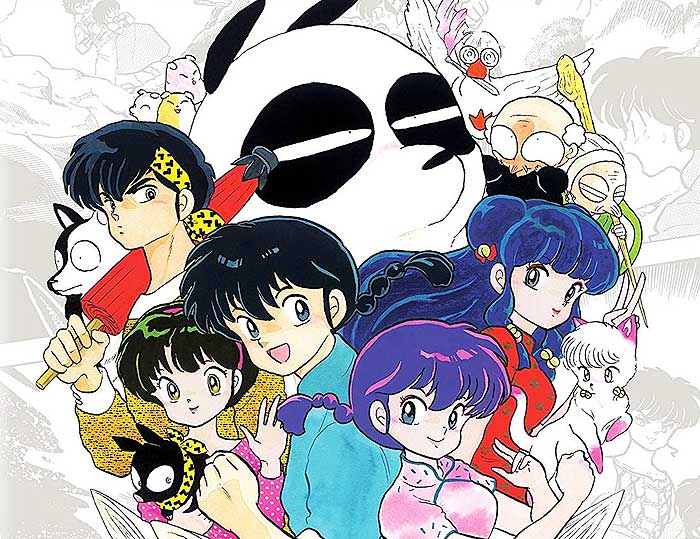
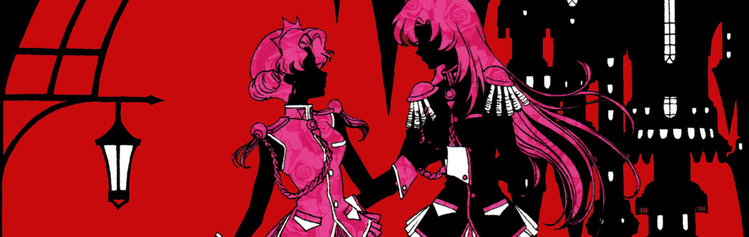
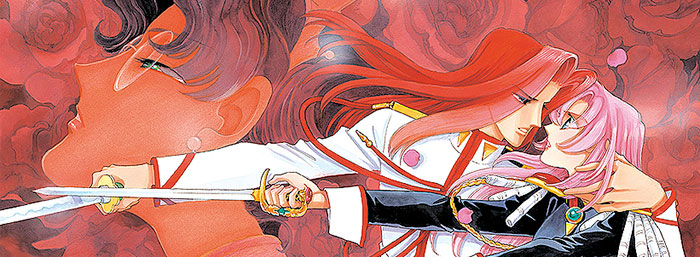
This struggle of self-mutilation comes to the fore most notably in the manga and anime genre known as "gender-bender." The gender-bender genre, encompassing a variety of other themes such as romance and comedy, is known for its focus on upsetting traditional gender and sexual norms. In many of the more popular series encompassed within this genre, this destabilizing of norms is accomplished through a variety of mediums including the switching of souls or minds as seen inYour Name, a magical curse that plays with the main character's established gender as inRanma 1/2, or through cross-dressing like inOuran High School Host Club orRevolutionary Girl Utena.
While mahō shōjo certainly offers interesting perspectives on feminist issues in spite of its pitfalls, it is important to remember that Magical Girl anime is also marketed to young men. Hence, the young men that are catered to by anime networks are encouraged to support these young female characters who embody the very traits that, as bell hooks pointed out, these young men are told that they must eradicate. Similarly, gender-bender manga and anime reveal the unstable ground upon which traditional notions of gender and sexuality rest by focussing on characters whose gender and sexuality are fluid. In the case ofRanma 1/2, which began its original run in 1987, the protagonist Ranma Saotome, according to Susan Napier, represents Judith Butler's theory of "the norm that chooses us" because his gender fluidity is out of his control due to a curse concerning a spring that he fell in while martial arts training.
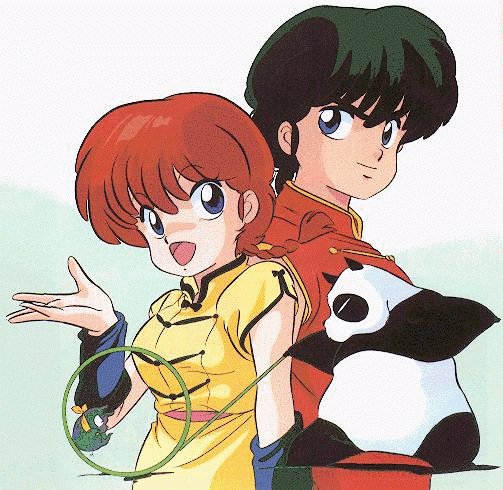
Ranma's situation is one that would likely resonate with present day gender issues: Ranma's often public displays of crossing gender boundaries causes great confusion for those around him because "they are uncomfortably aware of a threatening destabilization of social boundaries without necessarily understanding the reasons for their own discomfort."Ranma 1/2′s ability to continually transgress social boundaries certainly positions it as material that can readily contribute to academic conversations concerning sexuality and gender. However, if one were to wonder whether or not a show likeRanma would be able to help people become more open and accepting towards transgender individuals, they would likely be let down. Napier goes on to say that "[w]hile boundaries are crossed and re-crossed to often riotous effect, the inevitably more conservative format of a weekly television series ultimately leads to a conservative resolution in which, at the end of each episode, the boundaries are reinscribed into the conventions of heterosexual hierarchical society."
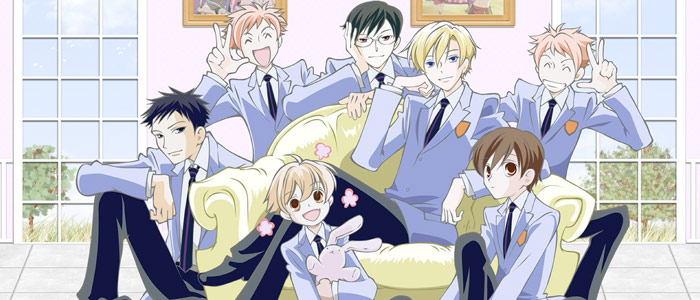
Ouran High School Host Club (OHSHC)is yet another seminal gender-bender series. Beginning in 2002,OHSHC follows Haruhi Fujioka, who attends an elite high school on a merit scholarship. Following the breaking of an expensive vase by mistake, Haruhi is enlisted in the schools host club so that they might pay back the club for the price of the vase. Haruhi presents themselves as mostly androgynous, and in the original Japanese version typically uses neutral pronouns when speaking about themselves. While Haruhi does not display much care concerning how others perceive or address them, most of the supporting characters, particularly those who work at the host club with them, perceive and treat Haruhi as a girl. Throughout much of the series Haruhi encounters harassment from her fellow host club workers, and much of this harassment centers around them insisting that Haruhi act, dress, and generally present more feminine.
There are several situations which arise throughout the series where Haruhi is reprimanded by their coworkers. The scoldings from their coworkers almost always are concerned with Haruhi's androgynous presentation, typically ending with Haruhi being told that they must always remember they are in fact a girl, and therefore are weaker. Hence, Haruhi should not put themselves into situations that, according to the host club members, only men can handle. At one point a fellow host club member even pretends that he is going to rape Haruhi merely to drive home the point that, at the end of the day, Haruhi is helpless and defenseless because they are a girl. Thus, in spite ofOHSHC's focus on an androgynous main character, which can and does upset gender norms, both the manga and the anime ultimately work to reinforce heteronormativity and the patriarchy.
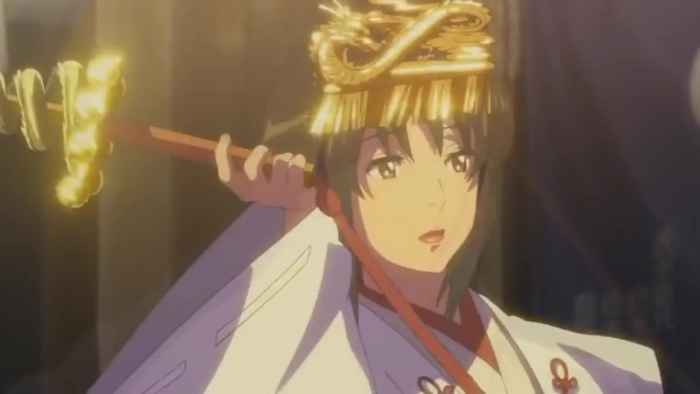
Perhaps one of the few gender-bender anime out there that presents such issues in a positive, or at the very least neutral, light is the 2017 animated filmYour Name. The film follows Mitsuha Miyamizu, a young Shinto shrine maiden, and Taki Tachibana, a high school boy living in Tokyo. Mitsuha's father is the mayor of their small town Itomori, leaving both Mitsuha and her younger sister in the care of their grandmother who teaches them the importance of Shinto traditions. Mitsuha, however, longs for a life in the big city, and she gets her wish when one morning she wakes up in the body of Taki, while Taki wakes up in her body. While the film does not follow too carefully what Taki does while in Mitsuha's body, save for a few breast-related incidents, the film does seem very interested in Mitsuha's antics whilst she inhabits the body of Taki. Mitsuha even goes so far as to ask Taki's manager at his part time job, a woman, out on a date. Mitsuha seems extremely disappointed when she realizes that she will not be in Taki's body to go on a date with her.
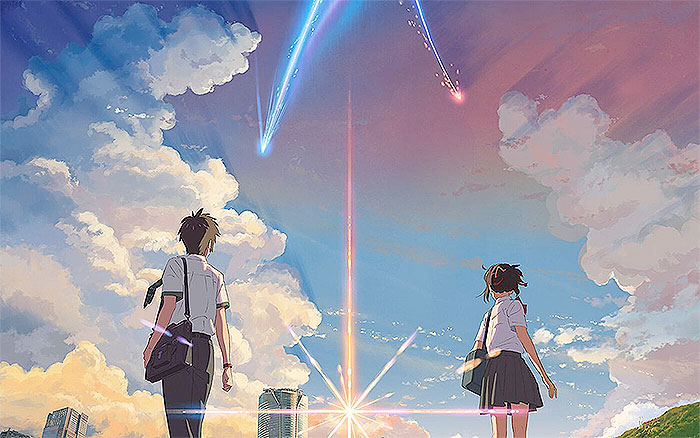
Mitsuha's disappointment upon this realization indicates that Mitsuha's sexuality might be more fluid than she lets on, and is reinforced by her declaration toward the beginning of the film that she desires nothing more than to be a cute boy living in the big city. Mitsuha's sexual, and perhaps gender, fluidity is not the focus of the film. However, the film's ability to capture Mitsuha's sexual curiosity as well as gender fluid leanings in a manner that is not problematic, but is instead a normal and accepted part of Mitsuha's personal identity, places it far ahead of other gender-bender series. The rest of the film focuses on Mitsuha's plans to save the citizens of Itomori from an impending commit, and while Taki and Mitsuha share several romantically charged moments together before the commit is set to destroy Itomori, Mitsuha does not rely on Taki for help. Instead, the film focuses on Mitsuha's own will and determination in the face of impending doom, accentuating her own personal autonomy in spite of the ascribed norms of her gender and the implications of her gender in both the small rural town of Itomori as well as in relation to her role as a shrine maiden.
In short, both mahō shōjo and gender-bender series can and do offer up an astounding array of themes that can prove useful within academia. In spite of the various pitfalls of each genre, there are still many aspects of any manga or anime which should, and have, been explored or critiqued through an academic lens. Gender Women's and Sexuality Studies as well as feminist philosophy would certainly not be worse off were they to make the decision to take manga and anime more seriously and incorporate it more within present day discourse. However, if one was hoping that either of these genres could help in making society more open to new ideas of gender and sexuality, they would likely come to find that this is not the case as many of the series mentioned here, at the end of the day, only serve to prop up heteronormativity and the patriarchal agenda.
What do you think? Leave a comment.
Receive our weekly newsletter:
What Happens When You Gender Bend Close Friends With A Magic App Lol
Source: https://the-artifice.com/manga-anime-feminism-gender-studies/
Posted by: reynoldspook1977.blogspot.com
0 Response to "What Happens When You Gender Bend Close Friends With A Magic App Lol"
Post a Comment